When you change contract manufacturer, the formula stays the same on paper, but only a comparison can show that the product did. That means securing reference batches and samples from the old site before the transfer, writing acceptance criteria in advance, and measuring the new site's first batches against the same criteria. Responsibility does not move with the site: it stays with the company placing the product on the market under its own brand.
If the formula is the same, why might the product change?
A recipe does not capture everything that determines the result. Moving from one site to another can change:
- Equipment: mixing and homogenisation set-up, heating and cooling profile, tank scale.
- Raw materials: the new site's approved suppliers. The same INCI name does not mean the same grade or the same impurity profile.
- Utilities: water system, cleaning regime, filling temperature.
- Packaging: the line, capping force, the primary pack supplier.
Not every product shows all of these effects. Emulsions, suspensions and high-active serums are often more sensitive than a simple aqueous solution. What matters depends on the product, so no single checklist fits everything.
What do the rules require when the site changes?
The GMP guideline of TİTCK, the Turkish regulator (KDD-KLVZ-01), has no separate section on technology transfer. Existing provisions have to be read together. The references below are to Türkiye's Regulation on Cosmetic Products; EU Regulation 1223/2009 follows a very similar structure.
| Provision | Requirement | What it means for a site change |
|---|---|---|
| Regulation Articles 4 and 6 | The brand owner who has the product made is manufacturer and responsible person | Responsibility stays with the brand owner |
| Regulation Article 13 | Safety report kept up to date with new information | Changes in stability, impurities or microbiology go to the assessor |
| Regulation Article 14 | Product information file covers the manufacturing method and GMP statement, updated as needed | Update it for the new site |
| Regulation Article 16 | Notified information updated without delay if it changes | Check affected fields with your responsible technical person |
| Annex I/B Part A | Composition, physical and chemical properties, stability, microbiology, impurities | These set the comparison headings |
| GMP section 14 | Written contract for each contract operation | The new contract should include acceptance criteria |
| GMP 13.2.11 | Written procedures and records for change control | Manage the transfer through a change record |
We set out the wider responsibility picture in contract manufacturing responsibility. This article deals only with the transfer itself.
Who does what, and in what order?
- Secure the records before the old relationship ends. Formula, manufacturing instructions, specifications, critical process parameters, batch records, approved supplier list. The GMP guideline requires batch records to be kept for at least one year after expiry (13.2.10), and retained samples likewise (12.4.1). You may lose access when the contract ends, so write the handover into it in advance.
- Choose reference batches. One batch does not show natural variation. Pick several trouble-free batches from the old site, take retained samples into your own hands, and measure them.
- Write acceptance criteria before the first production run. Which range applies to which parameter, and who decides on a deviation? A range written afterwards invites argument.
- Measure the new site's first batches. A pilot batch may not represent industrial scale, so include the first full-scale batches in the plan.
- Assess and record. If the difference is within range, close the change record. If it is not, adjust the process or go to the safety assessor.
- Keep the two sites apart during the transition. Products from both can be on the market at once. Batch numbering should show which site each batch came from, which is where batch identity matters.
What should be compared?
| Heading | Example parameters | Why it matters |
|---|---|---|
| Physical and chemical | Appearance, colour, odour, pH, viscosity, density | Process differences often show here first |
| Component profile | Active level, product profile against the reference | Basis for claims and batch identity |
| Microbiology | Microbiological specification, preservation efficacy test where relevant | Water system and hygiene differences |
| Stability | Behaviour under reasonably foreseeable storage conditions | Shelf life and period-after-opening statements |
| Impurities | Arising from raw material from new suppliers | Purity information in the safety report |
| Pack compatibility | Sealing, interaction with the product | New line and pack supplier |
Not every parameter is needed for every product. If the formula, raw material sources and pack all stay the same, the scope can narrow, but the rationale should be in writing. Decide with your safety assessor whether new stability work is needed, since the report goes out under the assessor's signature.
Frequently asked questions
Can I take the formula to the new site? That depends on the old contract and who owns the formula. If a ready-made base formula was used, rights may have stayed with the manufacturer. Get legal advice and build the transfer plan around it.
Does the new site's GMP certificate replace the comparison? No. A certificate tells you about the site's system; it does not show that your product comes out the same as earlier batches.
Do I need to notify the product again? Article 16 of the Turkish regulation requires notified information to be updated without delay if it changes. Your responsible technical person should check which field is affected and whether anything further is needed in the national system.
Where does Kozvex fit in the transfer?
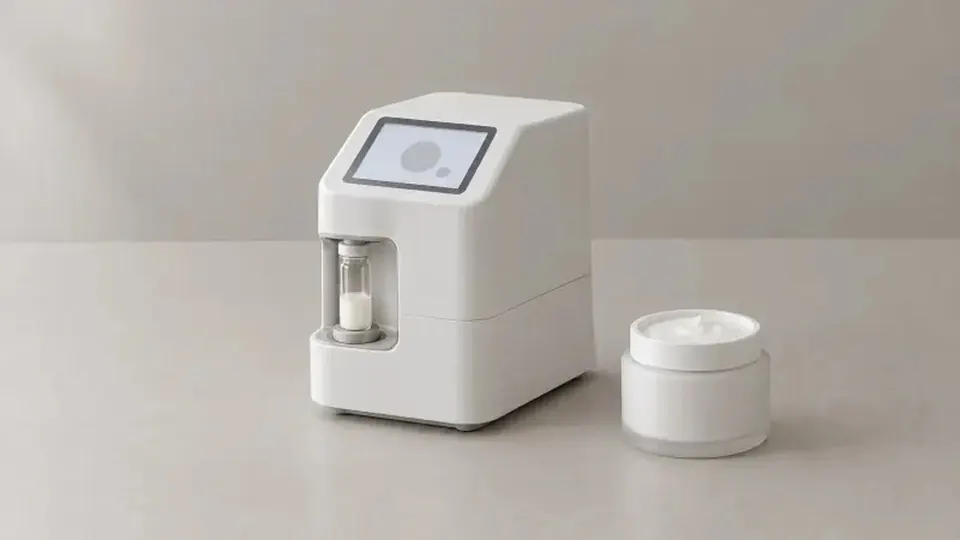
In Kozvex, an approved batch is defined as a reference and later batches are compared against it. Because the reference belongs to your product, it is assessed by the same measure whichever site makes it, and you hold a record independent of the contract manufacturer's statement. Scanning is done with the handheld device and mobile app; where a decision is needed, the sample goes to a contracted accredited laboratory. The record does not replace stability work, the safety assessment or the contract. Detail is on the how we work and skincare pages.