Regulation (EU) 2026/78 banned 15 more CMR substances in cosmetics from 1 May 2026, and three further EU dates follow in 2027: 1 January, 1 February and 6 June. The EU date for D5 is 6 June 2027, and it comes from REACH rather than the Cosmetics Regulation. The 31 December 2026 date quoted for D5 in Türkiye comes from a press-reported draft; we could not find a text published in the Official Gazette.
This article is not legal advice. Check the current annexes and your responsible person's assessment before acting.
Which date changes what?
| Date | Measure | Scope | Status |
|---|---|---|---|
| 1 Sept 2025 | EU 2025/877 | TPO added to Annex II | In application |
| 1 May 2026 | EU 2026/78 | 15 new CMR substances; changes for silver and hexyl salicylate | In application |
| 31 Dec 2026 | Turkish draft | Placing D5 products on the market | Press report, no published text |
| 1 Jan 2027 | EU 2026/909 | Triphenyl phosphate ban; limits for aluminium, zinc salts and certain fragrance substances | Published; non-compliant products cannot be placed on the market |
| 1 Feb 2027 | EU draft (G/TBT/N/EU/1219) | CMR substances classified by 2025/1222 | Draft, adoption proposed for Q4 2026 |
| 6 June 2027 | EU 2024/1328 (REACH) | 0.1% limit for D4, D5 and D6 in leave-on products, and for D6 in wash-off products | Published |
| 1 July 2028 | EU 2026/909 | Non-compliant products can no longer be made available | Published |
How does the EU CMR ban work?
Once a substance receives a harmonised classification as carcinogenic, mutagenic or toxic for reproduction (CMR), its use in cosmetics is prohibited in principle and it goes into Annex II. Regulation 2026/78 of 12 January 2026 is the latest round of this mechanism. It contains no transitional provision and applies from 1 May 2026.
It adds 15 entries to Annex II, numbered 1752 to 1766, including trimethyl borate, 1,4-dichloro-2-nitrobenzene and several pesticide actives. Few formulators would expect to find these as declared ingredients; the practical question is whether they could arrive as residues in a raw material. The regulation also splits silver by form: nano and massive silver move to Annex II, while silver powder between 100 nm and 1 mm stays usable under restrictions in Annexes III and IV. Hexyl salicylate enters Annex III with limits that vary by product type.
What is coming in the EU in 2027?
Regulation 2026/909 of 27 April 2026 adds triphenyl phosphate to Annex II and sets new limits for aluminium-containing ingredients, water-soluble zinc salts, benzyl salicylate and citral. It also caps the di-n-hexyl phthalate impurity in the UV filter DHHB at 10 ppm. According to a circular from INFARMED, Portugal's medicines and health products regulator, non-compliant products cannot be placed on the market from 1 January 2027 or made available from 1 July 2028.
A draft notified to the WTO on 8 July 2026 transposes the CMR classifications of Delegated Regulation 2025/1222, which applies from 1 February 2027. It also prohibits benzophenone-1, benzophenone-2, Basic Brown 16, Basic Blue 99 and prostaglandin analogues, and sets conditions for BHA, butylparaben, CBD and nano hydroxyapatite. Rely on the final text once it appears in the Official Journal.
Where does D5 stand in the EU and Türkiye?
In the EU, D4, D5 and D6 are restricted under REACH Annex XVII through Regulation 2024/1328, not through the Cosmetics Regulation. The 0.1% limit for D4 and D5 in wash-off products has applied since 31 January 2020. For all other cosmetic products, the same limit applies after 6 June 2027. It is calculated by weight for each substance separately, and the regulation has separate provisions for residues from silicone polymers.
In Türkiye, the latest published amendment we could find is the regulation in Official Gazette No. 32480 of 5 March 2024. In the 8 May 2023 text of the Regulation on Cosmetic Products, D4 (octamethylcyclotetrasiloxane) sits at line 1388 of Annex II, and that text has no line for D5. EU annexes do not take effect in Türkiye automatically; the Turkish annexes change through amendments published in the Official Gazette.
Press reports on 2 September 2026 described a draft, attributed to the Ministry of Trade, that would ban placing D5 products on the market from 31 December 2026, along with hair dye warnings and QR code access to product information. We could not obtain the official draft, so that date should not be read as a legal deadline. If a D5 product is being reformulated anyway, it is still reasonable to keep it in the plan as a possible early scenario.
How should manufacturers and brands prepare?
- Screen by CAS number. Compare every raw material, including fragrances and mixtures, against the new entries. An INCI search will not reveal residues.
- Get supplier declarations in writing and up to date. A declaration should name the substance, state the residue level and carry a date. Ask specifically about D5 residues in silicone-containing materials.
- Tie contract manufacturers to change notification. Raw material and supplier changes should be notified in advance. We cover this in contract manufacturing responsibility.
- Update the files. Reformulation affects the safety report (Article 13), the product information file (Article 14) and, where relevant, the notification (Article 16) under the Turkish regulation.
- Measure the first batches after reformulation. The supplier's declaration says the substance is gone; measuring the new batch tests that. Traces of a prohibited substance are acceptable only if technically unavoidable and the product is safe (Article 20), and the safety report must hold the evidence.
- Plan stock around two dates. For importers and distributors, placing on the market and making available lead to different outcomes. Regulation 2026/78 has no transition period; Regulation 2026/909 has two separate dates.
Where does Kozvex fit?
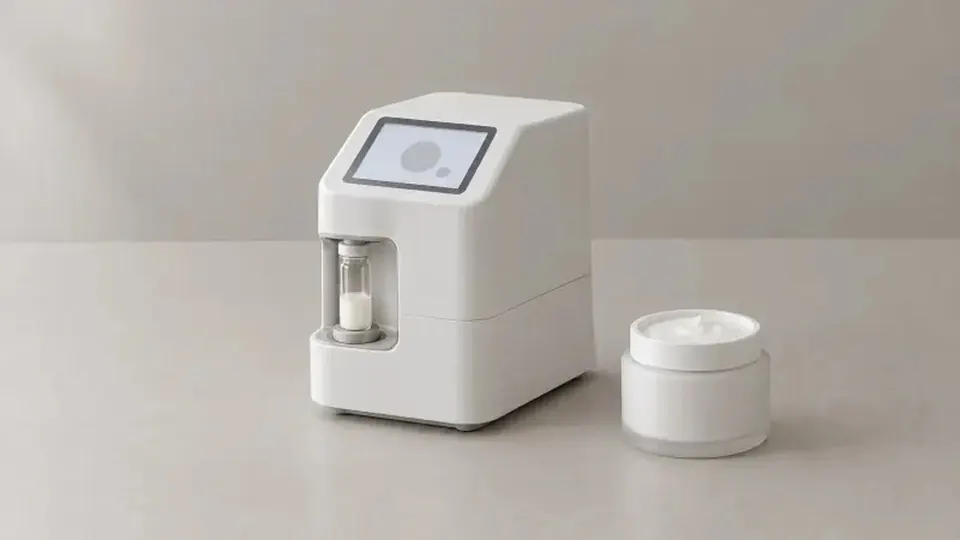
Kozvex lets companies that rely on a supplier's declaration, a contract manufacturer's notice or an importer's paperwork compare that declaration with a measurement taken from the product itself. A finding of an undeclared substance goes into the batch record, and where a specific prohibited substance has to be determined, the sample goes to a contracted accredited laboratory. The record does not replace the responsible person's obligations or the safety assessment. Detail is on the solutions and how we work pages.
Sources
- Regulation (EU) 2026/78
- Regulation (EU) 2024/1328 (D4, D5, D6)
- INFARMED circular on Regulation (EU) 2026/909, 26.05.2026 (in Portuguese)
- EU TBT notification G/TBT/N/EU/1219, 8.07.2026
- EU Retail Platform, TPO questions and answers
- Regulation on Cosmetic Products, TİTCK text (in Turkish)
- Regulation on Cosmetic Products, Official Gazette, 8 May 2023, No. 32184 (Repeated) (in Turkish)
- Amending regulation, Official Gazette, 5 March 2024, No. 32480 (in Turkish)
- Press report, Internet Haber, 2 September 2026 (in Turkish)