A counterfeit cosmetic usually gives itself away first through its label and where it is sold. In Türkiye, the packaging of every cosmetic product on the market must carry the responsible person's name and address, the batch number, the durability information and the list of ingredients, and the product must have been notified with its barcode before being placed on the market. A careful counterfeit can copy all of that, so the final word comes from measuring the contents.
How common are counterfeit cosmetics?
According to EUIPO's study of the cosmetics and personal care sector, legitimate manufacturers in the European Union lose 7.8% of the sector's sales to counterfeits, around EUR 4.7 billion a year. The 2025 OECD and EUIPO report estimates that 4.7% of EU imports in 2021 were counterfeit and pirated goods.
In cosmetics that loss also has a health side. If nobody knows what is inside a product applied to the skin, the hair or around the eyes, nothing can be said about its safety.
What information is mandatory on a cosmetic label?
Article 22 of Türkiye's Regulation on Cosmetic Products lists the information that must appear, indelible, easily legible and visible, on the inner and outer packaging of every cosmetic product. When you hold a product, these are the items to look at:
- The name or registered name and address of the responsible person. Imported products also state the country of origin.
- Nominal content: weight or volume. There are exceptions, such as packaging under 5 grams or 5 millilitres.
- Durability: a date with the words "best used before" or the corresponding symbol. For products whose minimum durability exceeds thirty months, the period after opening is given instead.
- Batch or serial number.
- Particular precautions for use.
- The list of ingredients under the heading "ingredients" (on the outer packaging).
The precautions, nominal content, durability and function of the product must be given in Turkish. If any of this is missing, misspelt or given only in a foreign language, there is good reason to suspect the product did not come through the official distribution chain. We explain how to read the list itself in INCI and the ingredient list.
What does a barcode check show?
Under Article 16 of the regulation, the responsible person notifies the Turkish Medicines and Medical Devices Agency (TİTCK), through the national electronic database, of information including the product's barcode, category and name before placing it on the market. The Ministry of Health's ÜTS mobile app shows the registered information when you scan the barcode or 2D code on the product.
If the product does not appear in the system at all, that is a serious warning. If it does appear, that only shows the barcode is registered; notification is not an approval. A barcode copied from a genuine product gives the same result on a counterfeit box.
What do the sales channel and the price tell you?
Counterfeit cosmetics circulate mostly outside authorised distribution. A price far below what the brand's authorised sellers charge, and a seller who avoids giving an invoice, returns or contact details, are the first things to look at. The same product appearing in different listings with a different box colour or typeface, a size or set the brand has never sold in that market, and packaging that has been opened and re-glued or is missing its protective seal also call for attention.
None of these is enough for a verdict on its own. Legitimate situations such as parallel imports and old stock produce similar pictures.
If the packaging is flawless, how are the contents checked?
In a good counterfeit the box, print and barcode look flawless; the difference is in the contents. The declared active ingredient may be short or missing, a cheap base may have been used, or a substance that is not on the list may have been added. None of this can be told by opening, smelling or applying the product; we explain why in can adulteration in cosmetics be told apart by eye?
To check the contents, the product's composition is measured and compared with the profile of a batch the brand knows to be correct. If the profiles match, the product is the brand's own; if not, it shows which component deviates and by how much. For this comparison to be possible, the brand has to have measured its own product beforehand and kept it as a reference.
What should a brand owner do on finding a suspicious product?
- Record the product with where, when and from whom it was bought.
- Keep photographs of the packaging, the batch number and the barcode separately.
- Where possible, buy more than one unit from the same seller and set one aside as a witness sample.
- Compare the contents with your own reference batch and have the result confirmed in a laboratory.
If the matter goes to a platform notice or to court, how the sample was taken will be questioned as closely as the measurement.
Where Kozvex fits in this check
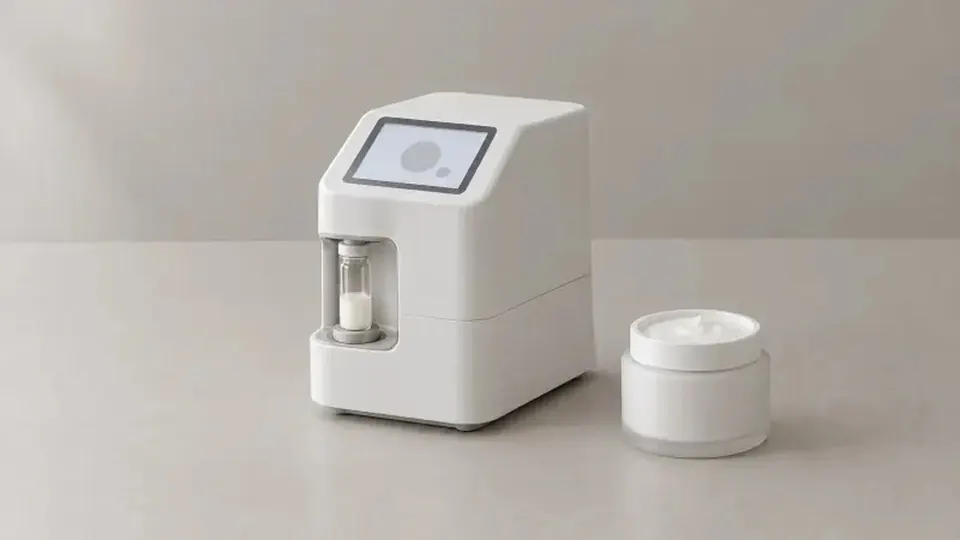
Kozvex compares the ingredient declaration on the label with a measurement taken from the product itself. A product bought from a shelf or online is scanned with the handheld device and the mobile app, and the result appears in the app and is recorded. Where a decision is needed, the sample is sent to a contracted accredited laboratory; the report sets the declared and measured contents side by side. This record does not replace TİTCK's market surveillance or a notification to the agency. Detail by product group is on the skincare and fragrance pages.