INCI (International Nomenclature of Cosmetic Ingredients) is the international common naming system for cosmetic ingredients; the "ingredients" list on the label is written using these names. Under Türkiye's Regulation on Cosmetic Products, ingredients are listed in descending order of their weight at the time they are added to the product, and those below 1% may appear at the end in any order. The list gives you the order, not the amount.
Why are INCI names used?
The same substance goes by different trade or chemical names from one country or supplier to the next. INCI gives every ingredient a single name; Glycerin, Aqua and Tocopherol come from this system. Labels of products made in different countries can therefore be compared in the same terms.
Article 33 of the regulation provides that TİTCK will publish, and update as needed, a glossary of cosmetic ingredients that takes account of internationally recognised nomenclatures including INCI. The same article states plainly that this glossary is not a list of ingredients authorised for use in cosmetics. An ingredient having an INCI name does not show that it can be used in every product at any level.
Using the common name on the label is mandatory. Where there is none, a name from a generally accepted nomenclature is used.
How is the ingredient list written on the label?
Article 22 of the regulation sets out the rules one by one:
- The list appears on the outer packaging; it may also be given on the inner packaging.
- It is preceded by "ingredients" or an equivalent expression in Turkish or English.
- Ingredients are given in descending order of weight at the time they are added to the product.
- Ingredients at concentrations below 1% may be listed in any order after those above 1%.
- Ingredients in nanomaterial form are followed by the word "nano" in brackets.
- Colourants other than hair dyes may be listed in any order after the other ingredients; the Colour Index (CI) number is used where applicable.
- For decorative products sold in several shades, colourants used across the range may be given with "may contain" or the "+/-" sign.
Impurities in the raw materials and technical auxiliary materials used in the mixture but absent from the finished product do not count as ingredients. If the product is very small or the information does not fit on the label, the list is given on an enclosed leaflet, label, tape or card. For small products such as soap, a notice next to the product at the point of sale is also accepted.
How do perfume and allergens appear in the list?
Perfume and aromatic compounds are not listed one by one; they appear as "parfum" or "aroma". Substances whose mention is required under the "other" column of Annex III of the regulation are written in addition to that term. In practice, certain fragrance allergens appear on the label under their own names. Someone sensitive to an allergen therefore does not stop at the word "parfum" but looks for that allergen's name in the list.
What does the ingredient list not tell you?
The first thing the list cannot tell you is quantity. Niacinamide may be third on the list. That does not say what percentage of the product it makes up; it only shows there is more of it than of what follows and less than of what comes before.
The second is the zone below the 1% threshold. Because those ingredients can be written in any order, an active ingredient promoted on the front of the pack may sit near the end of the list, and nothing about its real amount can be read from the list.
The third is whether the declaration is true. The list is the responsible person's declaration; on its own it does not prove the ingredients went into the product in that order and form. Article 23 of the regulation prohibits text, names and signs that imply characteristics the product does not have. A product that says "10% vitamin C" on the front has to be consistent with the list on the back, which makes this a compliance matter.
Is the Turkish rule the same as EU 1223/2009?
The Regulation on Cosmetic Products was published in the Official Gazette of 8 May 2023, entered into force six months later and repealed the 2005 Cosmetics Regulation. Its own text states that it was prepared taking account of the EU's Regulation (EC) No 1223/2009 on cosmetic products.
On the ingredient list the two texts follow the same rule. Article 19(1)(g) of the EU Regulation also requires the list to begin with the term "ingredients", sets the descending order of weight, and allows those below 1% to be written in any order at the end. In Türkiye the heading may be in Turkish or English. A company exporting to the EU can therefore, in most cases, use the same list in both markets.
How is the declaration compared with the product?
Only measurement links the list to the product itself. Verification usually looks at three things: whether the declared active ingredient is present at the expected level, whether a substance not on the list, especially a prohibited or restricted one, is present, and whether the batch carries the same profile as the reference batch the brand knows to be correct.
In Kozvex the comparison starts from the label
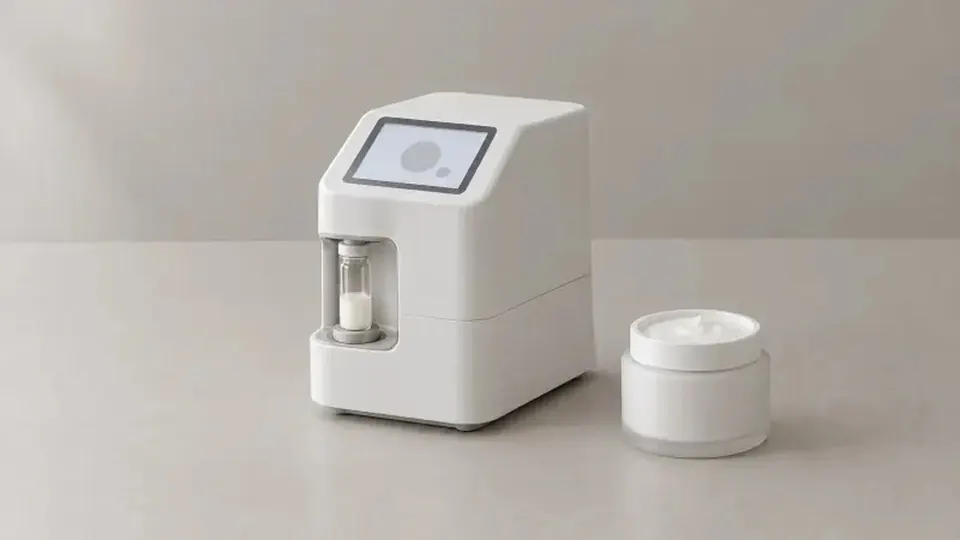
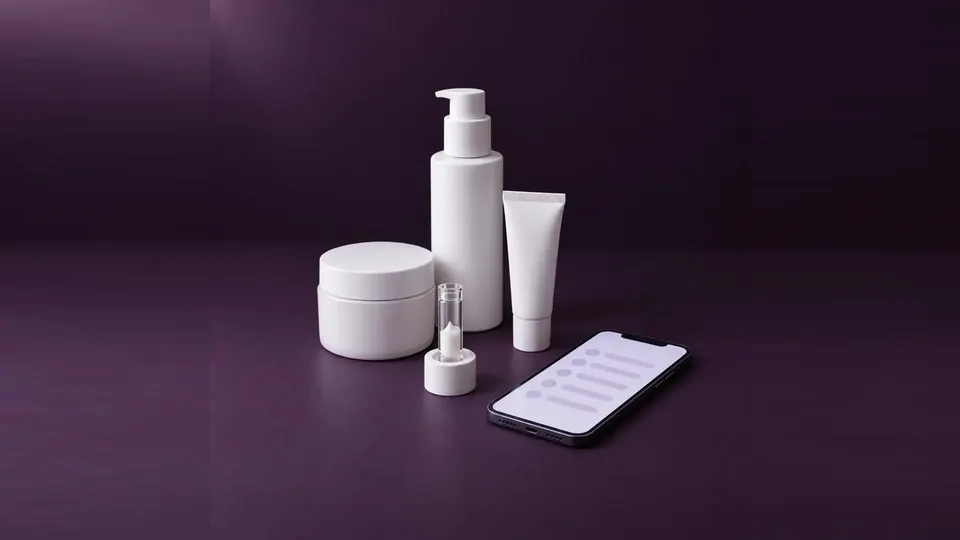
In Kozvex the starting point is the ingredient list on the label. The products to be tracked and the claims to be verified are agreed together. The product is scanned at your facility with the handheld device and the mobile app; where a decision is needed, the sample goes to a contracted accredited laboratory. The report sets declared and measured content side by side, and checks for undeclared and prohibited substances go into the same record. The label's regulatory compliance and the product's safety assessment remain the responsible person's obligation; the measurement record does not replace them. Detail is on the solutions and how we work pages.